
Breakfast Burritos with Beans and Salsa Verde Recipe


Breakfast burritos are a staple of the American breakfast landscape, but their DNA is deeply rooted in the vibrant flavors of Latin American cuisine. A breakfast burrito is a handheld meal consisting of a large flour tortilla wrapped around a variety of fillings, most commonly eggs, beans, cheese, and various proteins. While modern iterations often include many different ingredients, the combination of creamy beans and a bright, acidic salsa verde—a green sauce typically made from tomatillos and chilies—provides a classic flavor profile that balances heavy, savory ingredients with fresh, zesty notes.
For the American home cook, mastering the breakfast burrito is about understanding how to layer textures and flavors to create a meal that is both satisfying and portable. This recipe focuses on a traditional approach using seasoned beans and a homemade or high-quality store-bought salsa verde. By understanding how to manage separate components—the eggs, the beans, and the sauce—you can create a breakfast that feels much more special than a standard sandwich. Whether you are preparing a quick meal for a busy weekday or a hearty brunch for a weekend gathering, this guide will help you assemble the perfect burrito.
Essential Ingredients and Substitutions
To achieve a balanced breakfast burrito, you need a mix of proteins, fats, and acidity. The quality of these components determines the final result. For the base, large flour tortillas (at least 10 or 12 inches in diameter) are necessary to ensure there is enough surface area to wrap the fillings without tearing. If you cannot find large flour tortillas, you may use smaller ones, but you will likely need to make "mini" burritos or tacos instead.
The beans serve as the creamy binder for the burrito. Traditionally, refried beans (frijoles refritos) are used. You can make these from scratch using canned or dried pinto beans, or simply use a high-quality canned version from your local supermarket. For the protein, large eggs are standard, but you can add crumbled chorizo (a spicy Mexican pork sausage) or cooked bacon to increase the heartiness. If you cannot find chorizo in your local grocery store, you can use standard breakfast sausage seasoned with a bit of smoked paprika and cumin to mimic the flavor profile.
Salsa verde is the star that cuts through the richness of the eggs and cheese. While many grocery stores sell jarred salsa verde in the international aisle, a fresh version made with tomatillos is much more vibrant. If tomatillos are unavailable at your supermarket, you can substitute them with tomatillo salsa made from canned green chilies, though the flavor will be slightly different. For cheese, a melting cheese is essential. While Monterey Jack or mild Cheddar are excellent choices that are easy to find in US supermarkets, authentic options like Queso Quesadilla or a mild white cheese are wonderful if you have access to a specialty Latin American market.
Ingredients List
- 4 large flour tortillas (10 to 12 inches)
- 6 large eggs
- 1 cup cooked pinto beans, mashed or refried (frijoles refritos)
- 1 cup shredded Monterey Jack or mild Cheddar cheese
- 1/2 cup salsa verde (tomatillo-based green sauce)
- 1/4 cup cooked breakfast meat (such as crumbled sausage, bacon, or chorizo)
- 1 tablespoon unsalted butter or vegetable oil (for the eggs)
- Salt and black pepper to taste
- Optional: 1/2 avocado, sliced, or a sprinkle of fresh cilantro for garnish
Step-by-Step Assembly Instructions

Preparation is key to a successful burrito. Because the components are served at different temperatures—the eggs and beans should be warm, while the salsa and avocado are often served cool or at room temperature—it is best to prepare the fillings before you begin the final assembly.
- Prepare the Eggs: In a medium bowl, crack the 6 eggs and whisk them thoroughly with a pinch of salt and pepper. Heat the butter or oil in a non-stick skillet over medium-low heat. Pour in the eggs and cook them slowly, stirring gently with a spatula to create soft, creamy curds. Avoid overcooking them, as they will continue to cook slightly from the heat of the other ingredients inside the burrito. Once cooked, remove from heat and set aside.
- Warm the Beans: Place your refried beans or mashed pinto beans in a small saucepan over low heat. If the beans seem too thick to spread easily, add a tablespoon of water or milk to loosen the texture. Keeping them warm ensures the burrito doesn't have cold spots.
- Prepare the Tortillas: This is a crucial step often missed. Place the tortillas in a dry skillet over medium heat for about 15 to 30 seconds per side, or wrap them in a damp paper towel and microwave them for 20 seconds. Warming the tortillas makes them pliable and prevents them from cracking when you fold them.
- Layer the Fillings: Lay a warmed tortilla flat on a plate. Begin by spreading a layer of warm beans in the center, leaving about two inches of space from the edges. Sprinkle a portion of the cheese over the beans so it begins to melt. Add a layer of the scrambled eggs, followed by your choice of cooked meat.
- Add the Salsa and Fold: Spoon a portion of the salsa verde over the fillings. If you are using avocado, add it now. To fold, lift the side of the tortilla closest to you and fold it over the filling. Fold the two ends toward the center, then roll the burrito tightly from the bottom up, keeping the filling tucked inside.
Tips for Success and Variations
A common mistake when making breakfast burritos is overstuffing them. While it is tempting to add every ingredient available, too much filling makes it nearly impossible to wrap the tortilla securely, leading to a messy eating experience. A good rule of thumb is to fill the center of the tortilla about halfway, leaving enough room at the edges to create a tight seal.
For those who prefer a crispy texture, you can perform a "sear" after rolling. Once the burrito is assembled, place it seam-side down in a hot, lightly oiled skillet for one minute per side. This "toasts" the tortilla, creating a golden-brown exterior and helping to seal the burrito shut. This also helps melt the cheese thoroughly.
Variations are endless. If you prefer a vegetarian version, simply omit the meat and increase the amount of beans or add sautéed bell peppers and onions. For a more spicy version, look for a salsa verde that includes serrano or jalapeño peppers, or add a dash of hot sauce directly into the eggs. If you are preparing these for a crowd, you can make a large batch of the fillings in advance, but wait to assemble the burritos until you are ready to eat to prevent the tortillas from becoming soggy.
Frequently Asked Questions
Can I make these burritos ahead of time and freeze them?
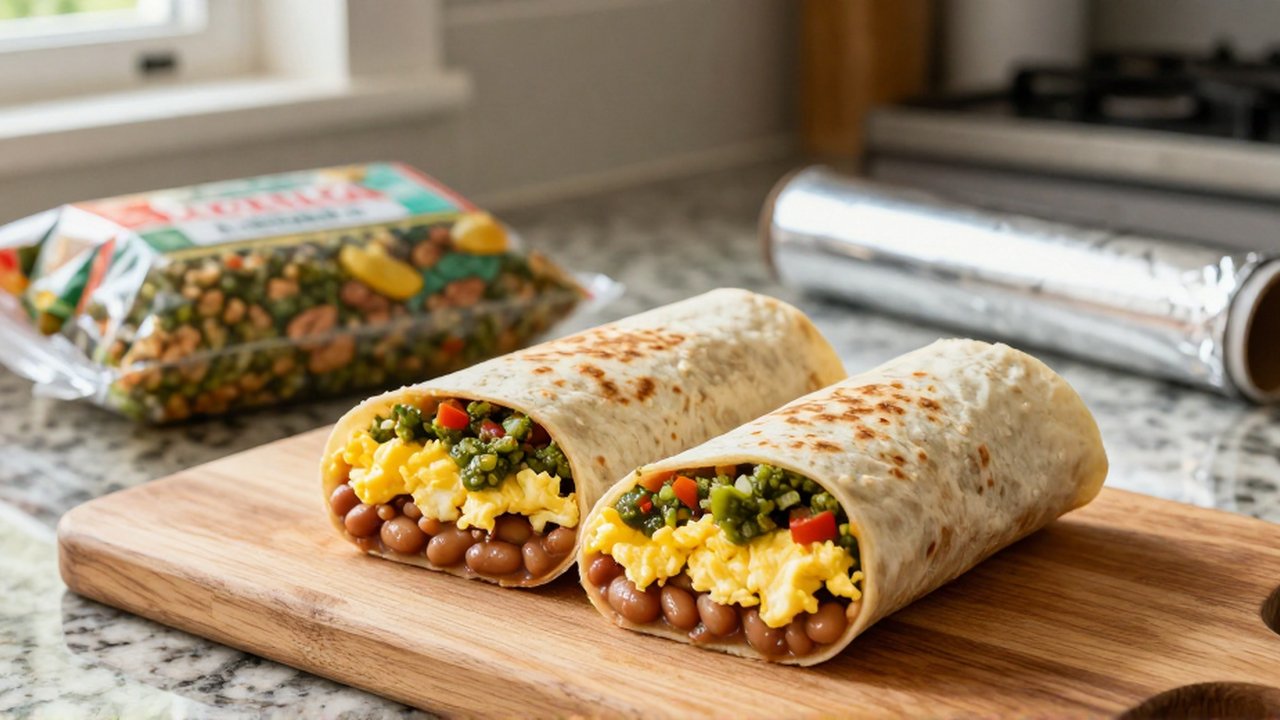
Yes, breakfast burritos are excellent for meal prepping. To freeze them, follow the assembly instructions but let all the ingredients cool to room temperature before rolling. This prevents steam from getting trapped inside, which would make the tortilla soggy when reheated. Wrap each burrito tightly in foil and place them in a heavy-duty freezer bag. When you are ready to eat, you can thaw them in the refrigerator overnight or reheat them directly from frozen in the microwave (removing the foil first) or in an oven at 350°F (175°C) until heated through.
How do I prevent my salsa verde from making the burrito soggy?
Soggy burritos are usually the result of too much liquid or applying sauce directly to the tortilla. To avoid this, spread your beans first; the beans act as a moisture barrier between the tortilla and the wetter ingredients like the eggs and salsa. Additionally, try to use a thick, chunky salsa rather than a thin, watery one. If using a very liquid salsa, you can add it to the side for dipping rather than putting it inside the wrap.
What is the best way to store leftovers?
If you have leftover cooked components like eggs or beans, store them in airtight containers in the refrigerator for up to three to four days. Reheat the eggs gently on the stove or in the microwave to avoid a rubbery texture. If you have assembled burritos that were not eaten, they should be consumed within a day if kept in the fridge, or frozen as mentioned above. Always ensure that any meat or egg components have reached a safe internal temperature during the initial cooking process.
Leave a Reply
Related posts