
Brazilian Feijoada Recipe with Black Beans and Beef

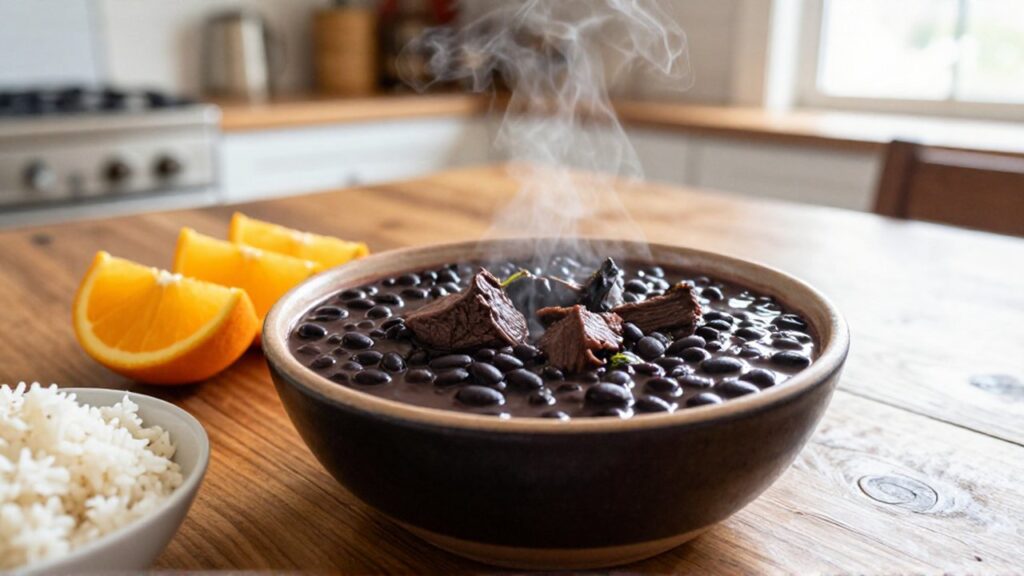
Feijoada is widely considered the national dish of Brazil, a rich, hearty, and soul-warming stew made with black beans and various cuts of salted or smoked meats. Traditionally, this dish is a centerpiece for festive gatherings and slow weekend lunches, designed to be shared among family and friends. While the most traditional versions of feijoada often incorporate a wide array of pork parts—such as ears, feet, or tails—providing a gelatinous texture that thickens the broth, many modern kitchens and international adaptations focus on premium cuts of beef and pork to ensure a texture that appeals to a broader range of palates.
For the American home cook, feijoada offers a wonderful opportunity to explore the deep, smoky flavors of Brazilian cuisine using ingredients that are readily available in local supermarkets. This recipe focuses on a robust version using black beans, beef, and smoked sausages, which provides the essential depth of flavor without requiring specialized butcher visits. By mastering this stew, you can bring a piece of Brazilian culinary heritage to your dinner table, creating a meal that is both comforting and sophisticated. This guide will walk you through the preparation, the essential flavor profiles, and the traditional accompaniments that turn a simple bean stew into a complete feast.
Understanding the Flavors of Feijoada

The soul of a great feijoada lies in the interplay between the earthy black beans and the smoky, salty elements of the meat. Unlike many American bean stews that might rely on tomato bases or heavy spices, feijoada is built on a foundation of aromatics—garlic, onions, and bay leaves—and the rendered fats from the meats. The beans should be cooked until they are tender but not completely disintegrated, creating a thick, velvety sauce that coats the meat.
To achieve the authentic taste, the use of smoked meats is non-negotiable. In a US kitchen, the easiest way to achieve this is by using high-quality smoked sausages or bacon. For the beef component, using cuts that can withstand long simmering, such as beef shank or chuck roast, ensures that the meat becomes tender and flavorful rather than tough. The goal is a cohesive stew where every spoonful offers a bit of bean, a piece of meltingly tender meat, and a hint of smoke.
Ingredients for Brazilian Feijoada
The following ingredients are scaled to serve approximately 6 to 8 people. Most of these items can be found in the international aisle or the standard meat and produce sections of any US grocery store.
- 1 pound (454g) dried black beans
- 1 pound (454g) beef chuck roast or beef shank, cut into 1-inch cubes
- 1 pound (454g) smoked sausage (such as Kielbasa or Andouille), sliced into thick rounds
- 1/2 pound (227g) thick-cut bacon, diced
- 1 large yellow onion, finely chopped
- 6 cloves of garlic, minced
- 3 bay leaves
- 2 tablespoons vegetable oil (or lard, if available)
- 4 cups (approx. 950ml) water or low-sodium beef broth
- 1 tablespoon coarse salt (adjust to taste, as smoked meats are salty)
- 1/2 teaspoon black pepper, freshly ground
- Optional: 2 tablespoons orange juice (to add a slight acidity that cuts through the fat)
If you cannot find specific Brazilian sausages like Paio (a smoked pork sausage), high-quality Kielbasa is an excellent substitute because of its firm texture and smoky profile. For the beef, if chuck roast is unavailable, beef stew meat is a practical alternative, though shank provides a richer mouthfeel due to its higher collagen content.
Step-by-Step Cooking Instructions
Follow these steps carefully to ensure the beans reach the perfect consistency and the meats are properly rendered.
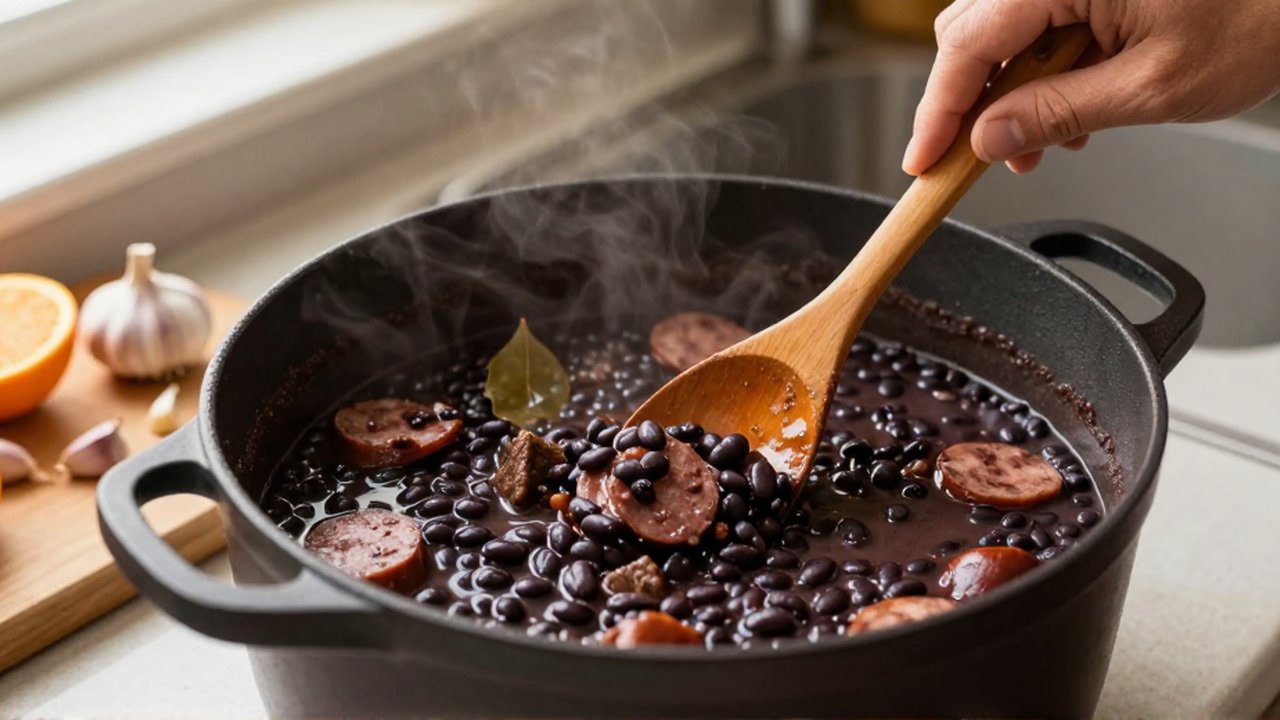
- Prepare the Beans: Rinse the dried black beans thoroughly under cold water. If you have time, soak the beans in water for at least 4 to 8 hours (or overnight) to reduce cooking time and improve digestibility. If you are short on time, you can skip the soak, but you may need to add an extra hour of simmering time.
- Sear the Meats: In a large heavy-bottomed pot or a Dutch oven, cook the diced bacon over medium heat until the fat has rendered and the bacon is crispy. Using a slotted spoon, remove the bacon and set it aside, leaving the rendered fat in the pot. Increase the heat slightly and add the beef cubes. Brown the beef on all sides to develop a deep crust. Remove the beef and set it aside with the bacon.
- Sauté Aromatics: In the same pot with the remaining fat, add the sliced smoked sausage and cook for about 5 minutes until the edges are browned. Add the chopped onion and cook until translucent. Stir in the minced garlic and cook for just one minute more to ensure it becomes fragrant without burning.
- Combine and Simmer: Return the browned beef and crispy bacon to the pot. Add the soaked (and drained) black beans, the bay leaves, and the water or beef broth. Bring the mixture to a boil, then immediately reduce the heat to low. Cover the pot with a lid, leaving it slightly ajar.
- The Slow Cook: Let the stew simmer gently for 1.5 to 2 hours. Check the beans periodically; if the liquid level drops too low before the beans are tender, add more hot water or broth. The beans are done when they are soft and the liquid has thickened into a rich gravy.
- Final Seasoning: Once the beans and meat are tender, taste the broth. Add salt and black pepper as needed, but be cautious, as the bacon and sausage contribute significant saltiness. If you prefer a brighter flavor, stir in the orange juice at this stage. Remove the bay leaves before serving.
Serving Suggestions and Traditions
In Brazil, feijoada is rarely eaten in isolation. It is traditionally served with a specific set of sides that balance the richness of the stew. To enjoy this meal like a local, consider preparing the following:
- Arroz Branco (White Rice): This is the essential base. A simple, fluffy long-grain white rice helps soak up the flavorful black bean broth.
- Couve à Mineira (Sautéed Collard Greens): Thinly sliced collard greens sautéed quickly with garlic and olive oil provide a fresh, slightly bitter contrast to the heavy meats. In the US, standard collard greens work perfectly for this.
- Farofa: This is toasted cassava (manioc) flour. Since cassava flour can be harder to find in standard US grocery stores, a toasted cornmeal or even toasted breadcrumbs mixed with butter and garlic can serve as a functional substitute to provide that essential crunch.
- Orange Slices: Providing fresh orange wedges on the side is a traditional practice. The acidity and citrus notes help cleanse the palate between bites of the rich, fatty stew.
Frequently Asked Questions
Can I make this recipe in a slow cooker?
Yes, you can. After browning the meats and sautéing the aromatics in a pan, transfer everything to a slow cooker. Add the beans and enough broth to cover them by at least two inches. Cook on "Low" for 7 to 8 hours or "High" for 4 to 5 hours. Note that the texture of the broth may be slightly thinner than the stovetop method, as the evaporation process is different.

How should I store and reheat leftovers?
Feijoada is actually one of those rare dishes that often tastes even better the next day after the flavors have had time to meld. Store leftovers in an airtight container in the refrigerator for up to 3 to 4 days. When reheating, you will likely find the beans have absorbed much of the liquid; add a splash of water or broth to bring the consistency back to its original richness.
How can I tell if the beans are cooked properly?
The beans should be creamy and tender when pressed against the roof of your mouth, with no hard or chalky center. If the stew is too thin, you can take a ladleful of the cooked beans, mash them into a paste in a small bowl, and stir them back into the pot to act as a natural thickener.
Leave a Reply
Related posts