
Easy Recipe for Sweet Fried Plantains with Cinnamon


Sweet fried plantains, often referred to as maduros in many Latin American households, are a beloved staple that brings a touch of tropical warmth to almost any meal. Unlike their green, starchy cousins used for savory dishes, these plantains are cooked when they are deeply ripe, allowing their natural sugars to caramelize beautifully in the pan. This recipe provides a straightforward method for achieving that perfect balance of a soft, melt-in-your-mouth interior and a slightly golden, caramelized exterior, finished with a dusting of cinnamon to elevate the flavor.
For the home cook in the United States, mastering this dish is a practical way to add authentic flavor to a variety of meals, such as grilled meats, rice and beans, or even as a standalone snack. Because plantains can sometimes require a bit of hunting in larger supermarkets, this guide focuses on how to identify the right fruit and how to execute the frying process efficiently. Whether you are looking for a side dish to complement a savory dinner or a simple sweet treat, these cinnamon-dusted maduros are a reliable addition to your culinary repertoire.
Choosing the Right Plantains
The most critical step in making sweet fried plantains happens before you even turn on the stove. Many people mistake plantains for bananas, and while they belong to the same family, their culinary uses are very different. To ensure your plantains are sweet and soft enough to caramelize, you must look for fruit that is significantly more ripe than what you would typically use for a banana. While a yellow banana is ready for eating, a plantain used for maduros should ideally have a skin that is heavily mottled with black or is almost entirely black.
When you peel a very ripe plantain, the flesh should be soft to the touch and slightly translucent, rather than firm and white. If you choose a plantain that is still mostly yellow or has green tips, the starch content will be too high, resulting in a texture that is more like a potato than a soft, sweet fruit. In US supermarkets, you can usually find plantains in the tropical fruit section near the mangoes and papayas. If you find them quite firm, you can leave them on your counter for a few days until the skins darken, as they will continue to ripen after purchase.
Ingredients and Equipment
To make this recipe, you do not need a long list of specialized items. The beauty of this dish lies in its simplicity. You will need high-quality ripe plantains, a fat for frying, and a few pantry staples to finish the dish. Because we are frying, the choice of oil matters; you want an oil with a medium-to-high smoke point to ensure the plantains cook evenly without burning the oil too quickly.
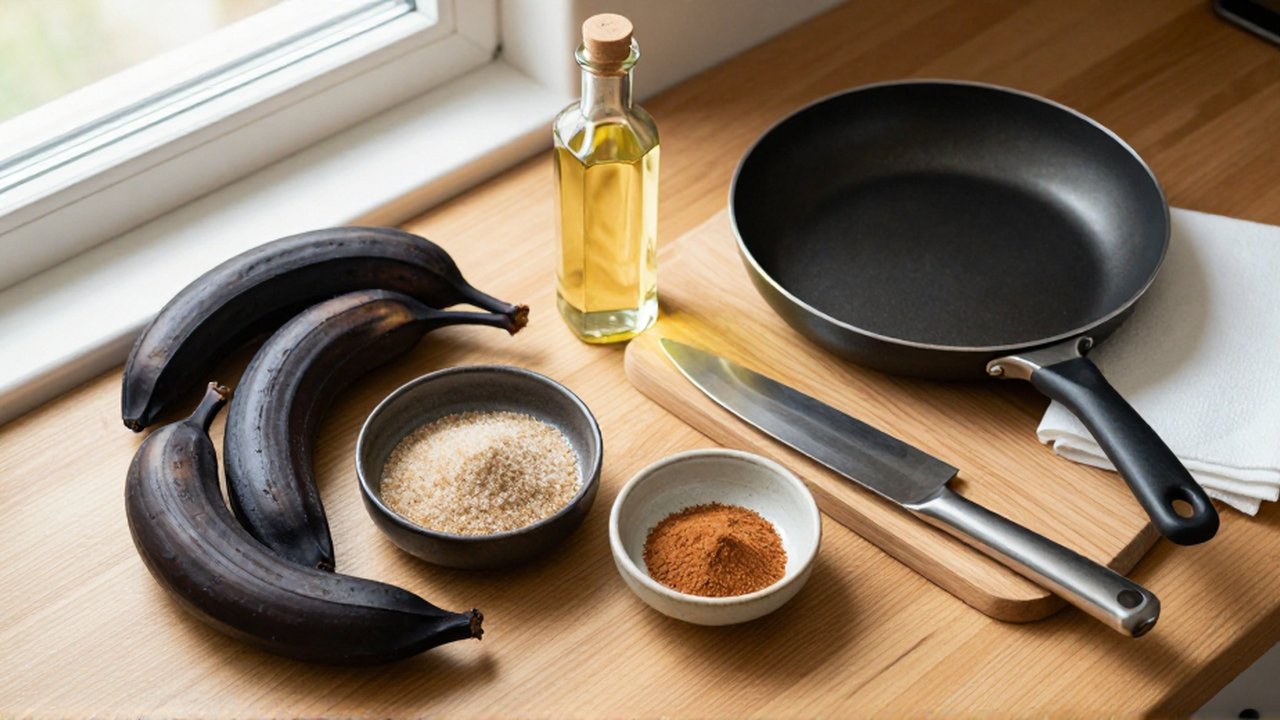
Ingredients
- 3 very ripe plantains (skin should be mostly black)
- 1/2 cup neutral frying oil (such as canola, vegetable, or grapeseed oil)
- 1 tablespoon granulated sugar (optional, for extra caramelization)
- 1 teaspoon ground cinnamon
- A pinch of fine sea salt
Equipment
- A medium non-stick skillet or heavy-bottomed frying pan
- A sharp chef’s knife
- Paper towels for draining
- A small bowl for the cinnamon mixture
Step-by-Step Cooking Instructions
Preparing the plantains requires a bit of patience to ensure they don't burn before they soften. Follow these steps to achieve consistent results every time.
- Prepare the plantains: Cut off both ends of the ripe plantains. Using a knife, slit the skin lengthwise. Because ripe plantains are soft, the skin should peel away easily in large strips. Once peeled, slice the plantains diagonally into pieces about 1/2 inch (1.25 cm) thick. Slicing on a bias (diagonally) increases the surface area, which helps with caramelization.
- Heat the oil: Pour the oil into your skillet. Turn the heat to medium. To test if the oil is ready, drop a small piece of plantain into the pan. If it sizzles gently, the temperature is correct. If it pops violently, the oil is too hot; if it sinks without bubbling, the oil is too cold.
- Fry the slices: Place the plantain slices in the skillet in a single layer. Do not overcrowd the pan, as this will lower the oil temperature and make the plantains greasy rather than caramelized. Fry for approximately 3 to 4 minutes on the first side.
- Flip and finish: Once the bottom side is a deep golden brown, flip the slices carefully with tongs or a spatula. Fry the other side for another 3 minutes. The plantains should look soft and slightly darkened.
- Drain and season: Remove the slices from the pan and place them on a plate lined with paper towels to absorb excess oil. While they are still hot, sprinkle them with a tiny pinch of salt to balance the sweetness.
- Apply the cinnamon: In a small bowl, mix the ground cinnamon with the optional granulated sugar. While the plantains are still warm and slightly tacky from the heat, sprinkle the cinnamon mixture over the top.
Expert Tips for Success
One common mistake when frying plantains is using heat that is too high. If the heat is too aggressive, the exterior will turn black and bitter before the sugars inside have had a chance to soften the fruit. Maintaining a steady medium heat is essential for that signature "melt-in-your-mouth" texture. If you notice the oil beginning to smoke, immediately turn the heat down and remove the pan from the burner for a moment.
Another tip involves the use of salt. It may seem counterintuitive to add salt to a sweet dish, but a very small pinch helps to cut through the richness of the oil and the intensity of the sugar. This doesn't make the dish "salty" in a traditional sense; rather, it brightens the flavor of the fruit. Additionally, if you prefer a more decadent version, you can add a small knob of butter to the oil during the last minute of frying to enhance the savory-sweet aroma.
Storage and Safety
If you have leftovers, these sweet fried plantains can be stored in an airtight container in the refrigerator for up to three days. However, please note that the texture will change as they cool; they will lose their crisp edges and become much softer. To revive them, avoid using the microwave, as this can make them gummy. Instead, reheat them in a dry skillet over medium-low heat for a few minutes per side until they are warmed through.
When handling the cooking process, always be mindful of oil safety. Never leave heating oil unattended, and never attempt to move the pan if it is splashing. If a small grease fire occurs, do not use water, as this will cause the fire to spread rapidly; instead, slide a lid over the pan to smother the flames and turn off the heat source. Always ensure the plantains are drained well on paper towels before serving to ensure the best eating experience.
Frequently Asked Questions

Can I use a different spice instead of cinnamon?
Yes, while cinnamon is the classic choice for this preparation, you can experiment with other warm spices. Nutmeg or a tiny pinch of cardamom can work well, provided you use them sparingly so as not to overpower the natural flavor of the plantain.
What if I can't find plantains at my local store?
In most US grocery stores, plantains are kept in the produce section, often near the bananas or exotic fruits. If your local store does not carry them, check an international or Latin American grocery store. If you absolutely cannot find them, you cannot substitute them with regular bananas, as the starch-to-sugar ratio is too different; however, you could use very ripe "Apple Bananas" or "Manzano" bananas if they are available, though the texture will be slightly different.
Why are my plantains soggy instead of caramelized?
Soggy plantains are usually the result of either oil that was too cold or crowding the pan. If the oil temperature drops too low, the plantain absorbs the fat rather than searing the surface. Ensure you are frying in a single layer and that the oil is at a consistent medium heat.
Leave a Reply
Related posts