
Recipe for Mexican Pico de Gallo with Fresh Tomato


Pico de gallo, also known as salsa bandera (flag salsa) due to its colors representing the Mexican flag—green, white, and red—is a fundamental staple of Mexican cuisine. This fresh, uncooked salsa is a bright, chunky condiment that relies entirely on the quality of its raw ingredients. Unlike cooked salsas that are blended into a smooth consistency, pico de gallo is characterized by its distinct pieces of tomato, onion, and chili, brought together by lime juice and salt. For the American home cook, it serves as a versatile "everything" side dish: it elevates grilled meats, brightens up heavy tacos, provides a crunchy texture to tortilla chips, or acts as a refreshing topping for avocado toast.
The beauty of a well-made pico de gallo lies in its simplicity. There are no complex techniques or specialized equipment required—only a sharp knife and an eye for fresh produce. Because the ingredients are not cooked, the flavor profile is defined by acidity, heat, and sweetness. This guide will provide you with a reliable, scalable recipe that prioritizes the texture and balance necessary to make a restaurant-quality salsa in your own kitchen. Whether you are preparing for a festive weekend gathering or simply looking to add a burst of freshness to a Tuesday night dinner, mastering this recipe ensures you have a vibrant, flavorful component ready at a moment's notice.
Essential Ingredients and Substitutions

The success of pico de gallo is dictated by the freshness of the produce. In US supermarkets, you will find a wide variety of tomatoes and peppers, and while the traditional versions use specific varieties, several substitutions work beautifully depending on what is in season or available at your local grocer.
The foundation of the dish is the tomato. Traditionally, Roma tomatoes (often labeled as plum tomatoes) are preferred because they have a lower water content and thicker walls, which prevents the salsa from becoming a soup. If you find yourself with vine-ripened tomatoes, which are juicier, consider removing the seeds and the watery pulp before dicing to maintain a chunky texture. For a sweeter profile, you might use cherry tomatoes, though you will need to adjust the seasoning to balance the extra sugar.
The heat comes from the chili. While serrano peppers are the most traditional choice for a sharper, more direct heat, jalapeño peppers are widely available in almost every US grocery store and offer a milder, more approachable kick. If you prefer a very mild salsa, you can deseed the peppers or omit them entirely. The "white" element of the salsa is provided by white onion, which offers a sharp, clean bite. Red onion is a common substitute if you prefer a slightly milder, sweeter flavor, though it may change the color of the salsa slightly more than intended.
For the seasoning, fresh cilantro and lime juice are non-negotiable. Cilantro provides the herbal, citrusy aroma that defines the dish, while lime juice acts as both a seasoning and a preservative, helping to "cook" the onions slightly and marry the flavors. If you cannot find fresh cilantro, you might be tempted to use dried cilantro, but this is not recommended as it lacks the necessary brightness; a small amount of extra lime juice or a splash of white vinegar can sometimes help, but fresh herbs are always the better path.
Recipe for Mexican Pico de Gallo

This recipe yields approximately 2 to 2.5 cups of salsa, which is enough to serve 4 to 6 people as a side or dip.
Ingredients:
- 1 pound (approx. 4-5 medium) Roma tomatoes, stems removed
- 1 medium white onion, finely diced
- 1 to 2 jalapeño peppers, stems and seeds removed (adjust based on heat preference)
- 1/2 cup fresh cilantro, stems removed and leaves roughly chopped
- 2 tablespoons fresh lime juice (about 1 large lime)
- 1/2 teaspoon fine sea salt, or more to taste
- Optional: 1/2 teaspoon minced garlic (for a more pungent version)
Instructions:
- Prepare the Tomatoes: Wash the tomatoes thoroughly. Cut them in half lengthwise and use a spoon to scoop out the watery seeds and membranes. This step is crucial for preventing a watery salsa. Dice the remaining tomato flesh into uniform, small pieces (about 1/4 inch).
- Dice the Aromatics: Finely dice the white onion. If you find the onion flavor too aggressive, you can soak the diced pieces in cold water for 5 minutes and then drain them before adding to the tomatoes; this removes the harsh sulfur compounds.
- Prepare the Peppers: Wash the jalapeño peppers. Slice them lengthwise and use a spoon to scrape out the seeds and the white inner ribs, as this is where most of the heat resides. Finely mince the pepper flesh.
- Combine: In a medium glass or ceramic bowl, combine the diced tomatoes, onion, minced jalapeño, and chopped cilantro.
- Season and Chill: Pour the lime juice over the mixture and sprinkle with salt. Toss gently with a spoon to ensure the ingredients are evenly distributed.
- Rest: Cover the bowl and let the salsa sit in the refrigerator for at least 15 to 30 minutes before serving. This resting period allows the salt to draw out the juices and the lime to meld the flavors.
Tips for Perfect Texture and Flavor
One of the most common mistakes home cooks make with pico de gallo is producing a mixture that is too liquid. As mentioned in the preparation steps, the moisture content of the tomatoes is the primary culprit. To ensure your salsa stays chunky and serves well as a dip, always aim to remove the "guts" of the tomato—the watery sac containing the seeds. If you find your salsa is still too wet after mixing, you can drain a small amount of the liquid off before serving.
Uniformity in cutting is also key. If your onion pieces are much larger than your tomato pieces, the flavor profile will be unbalanced; you will get a mouthful of onion one moment and a mouthful of tomato the next. Aiming for a consistent 1/4 inch dice for all main ingredients creates a harmonious bite where every spoonful contains a little bit of everything.
Regarding seasoning, remember that salt is a transformative ingredient here. It does more than make the dish salty; it pulls the juices out of the vegetables to create a natural "dressing." However, because the salt continues to draw out moisture while the salsa sits, it is often better to under-salt slightly at the beginning and add a final pinch of salt just before serving if the flavors seem muted.
Storage and Food Safety
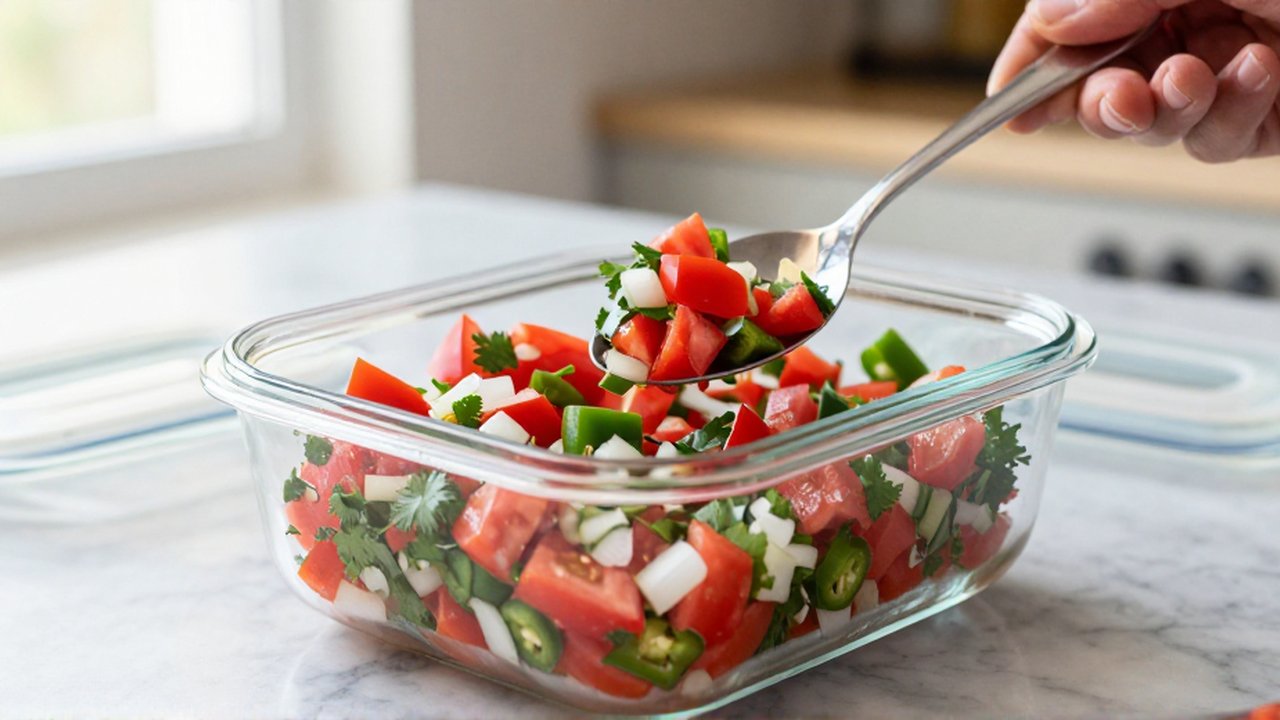
Because pico de gallo is a raw vegetable dish, food safety and storage are important considerations. Always wash your produce thoroughly under running water before cutting to remove any soil or surface bacteria. When handling peppers, avoid touching your eyes or face, as the oils from the jalapeño or serrano can cause significant irritation.
Pico de gallo is best enjoyed fresh. While it can be stored in an airtight container in the refrigerator, the texture will inevitably change over time. As the salt draws moisture out of the vegetables, the salsa will become more liquid and the vegetables may lose their crispness. For the best experience, consume the salsa within 24 hours. If you notice any off-smells or if the texture becomes excessively slimy, discard it.
When storing leftovers, keep them in a glass container if possible. Glass does not absorb odors and is less likely to react with the acidity of the lime juice compared to some plastic containers. Always use a clean spoon when serving to avoid cross-contamination, which can lead to faster spoilage.
Frequently Asked Questions
Can I make this ahead of time?
You can prepare the ingredients (dicing the tomatoes, onions, and peppers) a few hours in advance and keep them in separate containers. However, do not mix them with the salt and lime juice until you are ready to serve. Once salt is added, the vegetables begin to break down and release water, which will affect the texture if left for too long.
How do I make it less spicy?
The heat in the salsa comes almost entirely from the seeds and the white pith (the membranes) inside the chili pepper. To make a very mild version, remove all seeds and pith, or simply replace the jalapeño with a mild bell pepper. Using a red bell pepper instead of a jalapeño will still provide a beautiful color contrast without any heat.
Is it possible to use dried spices instead of fresh?
While some recipes call for dried oregano, I recommend sticking to fresh cilantro and lime juice for a traditional pico de gallo. The "freshness" is the defining characteristic of this dish. Dried herbs tend to have a dusty texture that can clash with the crisp, juicy nature of the raw vegetables.
Leave a Reply
Related posts