
Mexican Carne Asada: Marinating and Grilling Steak


Carne asada, which translates literally to "grilled meat," is a cornerstone of Mexican culinary culture and a staple of outdoor gatherings across the United States. While the term can refer to many different cuts of beef, in a home cooking context, it typically describes thin, flavorful slices of steak that have been marinated in a bright, acidic mixture and then seared quickly over high heat. The result is a dish characterized by a smoky exterior, a tender interior, and a punchy flavor profile that balances citrus, garlic, and earthy spices.
For the American home cook, mastering carne asada is a gateway to making authentic tacos, burrito bowls, or steak salads without needing specialized equipment or hard-to-find ingredients. Most of the essential components—lime juice, cilantro, cumin, and standard beef cuts—are readily available in any local supermarket. This guide will walk you through the essential steps of selecting the right meat, preparing a balanced marinade, and applying proper grilling techniques to ensure your steak is juicy and flavorful rather than tough or charred.
Selecting the Best Cuts of Beef
The success of a great carne asada begins at the butcher counter. Because the cooking method involves high heat and relatively short durations, you want a cut of meat that possesses enough fat to stay moist but is tender enough to be sliced easily. In many Mexican households, the choice of meat depends on the budget and the specific occasion, but a few cuts consistently perform well under the grill.
Skirt steak (arrachera) is perhaps the most traditional choice for carne asada. It has a distinct, coarse grain and a deep beefy flavor. Its high fat content makes it ideal for marinating, as the acid in the marinade helps break down the fibers. Flank steak is another excellent option; it is leaner than skirt steak but offers a similar texture and responds beautifully to thin slicing against the grain. If you are looking for something a bit more premium, flank steak or even hanger steak provides a buttery texture that holds up well to high heat.
If you find yourself at a supermarket where these specific cuts are unavailable, you can substitute with top sirloin or even ribeye steaks. While these may be thicker and more expensive, they are quite delicious when treated with the same marinade. The key is to remember that if you use a thicker cut, you will need to adjust your cooking time to ensure the center reaches a safe temperature without burning the outside. Regardless of the cut, always look for meat with good marbling—the white flecks of intramuscular fat that melt during cooking to provide moisture and flavor.
The Anatomy of an Authentic Marinade
A marinade for carne asada serves two purposes: it adds a layer of complex flavor and acts as a tenderizer. The most effective marinades utilize an acid to soften the muscle fibers, an oil to carry flavors and prevent sticking, and aromatics to provide depth. In Mexican cooking, the brightness of citrus is non-negotiable.
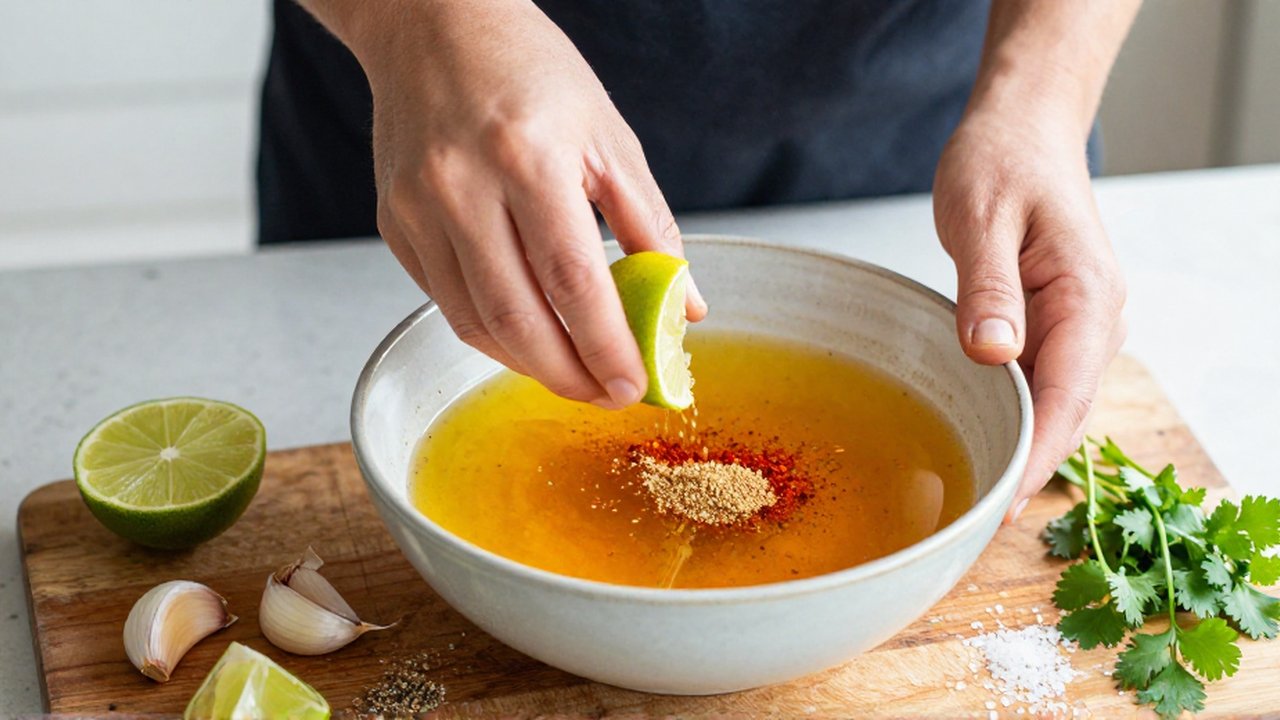
A classic marinade relies heavily on lime juice and orange juice. The acidity of the lime works to tenderize the meat, while the slightly sweeter orange juice helps balance the flavors and aids in the caramelization process on the grill. Garlic is the second most important component; using fresh, smashed cloves provides a much more vibrant flavor than garlic powder. To round out the profile, we use dried spices like cumin for earthiness and chili powder or dried ancho chili powder for a subtle warmth.
Essential Carne Asada Marinade Ingredients
To prepare enough marinade for approximately 2 pounds (0.9 kg) of steak, use the following:
- 1/4 cup fresh lime juice (about 2 to 3 limes)
- 1/4 cup fresh orange juice
- 1/4 cup extra virgin olive oil or a neutral oil like avocado oil
- 4 cloves garlic, minced or crushed
- 1 tablespoon fresh cilantro, finely chopped
- 1 teaspoon ground cumin
- 1 teaspoon chili powder (mild or medium)
- 1/2 teaspoon dried oregano (preferably Mexican oregano if available)
- 1 teaspoon kosher salt
- 1/2 teaspoon freshly cracked black pepper
Substitution Tip: If you cannot find fresh limes, you can use bottled lime juice, but avoid using bottled lemon juice, as the flavor profile is significantly different. For the oregano, standard Mediterranean oregano works fine, though it is slightly more floral than the earthy Mexican variety.
Step-by-Step Preparation and Grilling
Once your ingredients are gathered, the process moves from preparation to high-heat cooking. The goal is to achieve a beautiful crust on the outside while maintaining a juicy center. Patience during the marinating stage is vital.
- Prepare the Meat: Pat your steaks dry with paper towels. This is a crucial step; if the meat is wet, it will steam rather than sear when it hits the grill. If using skirt or flank steak, you can leave them whole or cut them into large manageable strips.
- Marinate: In a large bowl or a heavy-duty resealable plastic bag, combine all marinade ingredients. Add the meat, ensuring every surface is well-coated. Seal the bag, removing as much air as possible, or cover the bowl tightly. Refrigerate the meat for at least 2 hours, but ideally between 4 and 8 hours. Do not marinate for more than 24 hours, as the acid in the citrus can begin to "cook" the meat and turn the texture mushy.
- Preheat the Grill: Prepare your outdoor grill (charcoal or gas) to high heat. You want the grates to be very hot, ideally reaching temperatures between 450°F and 500°F (232°C–260°C). A hot grill ensures the meat sears quickly.
- Grill the Steak: Place the meat on the hot grates. For skirt steak, cook for about 3 to 5 minutes per side. For thicker flank or sirloin steaks, you may need 5 to 7 minutes per side. Use a meat thermometer to check for doneness. For medium-rare, aim for an internal temperature of 130°F to 135°F (54°C to 57°C).
- Rest the Meat: This is the most frequently skipped but most important step. Remove the meat from the grill and transfer it to a cutting board. Tent it loosely with aluminum foil and let it rest for at least 10 minutes. This allows the juices to redistribute throughout the meat.
- Slice Against the Grain: Look for the direction the muscle fibers are running. Use a sharp knife to slice across those fibers (perpendicular to them). This shortens the fibers and makes each bite much easier to chew.
Common Mistakes and Safety Tips
Many home cooks struggle with carne asada because they treat it like a standard steakhouse preparation. One common error is crowding the grill. If you put too many pieces of meat on at once, the temperature of the grill will drop, and the meat will boil in its own juices rather than searing. Cook in batches if necessary to maintain high heat.
Another mistake is slicing the meat while it is still hot. If you cut it immediately after removing it from the grill, the juices will run out onto the board, leaving you with dry, chewy meat. Always respect the resting period.
From a food safety perspective, ensure that you do not use the same plate or surface for the cooked meat that you used for the raw meat and marinade without thoroughly washing it with hot, soapy water. When marinating, always keep the meat in the refrigerator; never marinate meat on the kitchen counter at room temperature, as this allows for rapid bacterial growth. If you have leftovers, store them in an airtight container in the refrigerator and consume them within 3 to 4 days.
Frequently Asked Questions
Can I make this marinade ahead of time?
Yes, you can prepare the liquid marinade up to two days in advance. Store it in a sealed jar in the refrigerator. However, do not add the meat to the marinade until you are ready to begin the marinating process.

My steak is very tough. What went wrong?
Toughness usually stems from one of three issues: the cut of meat was naturally very lean/sinewy (like a bottom round), the meat was not sliced against the grain, or it was overcooked. Ensure you are using skirt, flank, or hanger steak for the best results, and always slice perpendicular to the fibers.
Can I cook carne asada in a pan instead of a grill?
Absolutely. If you don't have access to a grill, a heavy cast-iron skillet is an excellent substitute. Heat the skillet over high heat with a small amount of high-smoke-point oil (like avocado or canola oil) and follow the same searing and resting instructions.
Leave a Reply
Related posts