
Traditional Tres Leches Cake: Soaking and Layering Tips


Tres Leches cake, which translates to "three milks cake," is one of the most beloved desserts across Latin America. This sponge cake is defined by its unique texture: it is not meant to be light and airy like a traditional chiffon, but rather incredibly moist, dense, and saturated with a sweet, creamy liquid mixture. The magic of the dish lies in the "soaking" process, where a light sponge cake acts as a vessel for a blend of condensed milk, evaporated milk, and heavy cream (or whole milk). For the home cook in the United States, mastering this dessert means understanding how to create a sponge that is sturdy enough to hold the liquid without collapsing, and how to distribute that liquid so every single bite is consistent.
This guide focuses on the two most critical pillars of a successful Tres Leches: the structural integrity of the sponge and the technique of the soak. Whether you are making this for a festive gathering or a quiet weekend treat, the goal is to achieve a dessert that is refreshing, creamy, and perfectly balanced in sweetness. We will walk through the essential ingredients, the step-by-step construction of the cake, and professional tips to ensure your cake is never soggy in the middle or dry at the edges.
The Foundation: Building a Sturdy Sponge
The most common mistake when making Tres Leches is using a standard cake recipe that is too delicate. If you use a recipe high in butter or oil, the fat can prevent the milk mixture from penetrating the crumb effectively, or conversely, the cake may turn into a mushy paste. A traditional Tres Leches uses a sponge cake base—often called a bizcocho—which relies on whipped eggs to provide lift rather than chemical leaveners like baking powder alone. This creates a "honeycomb" structure of air pockets that act like a sponge, drawing the milk deep into the center of the cake.
To achieve this, you must ensure your eggs are at room temperature. When you whip the eggs with sugar, you are creating a stable foam. If the eggs are cold, the foam will be less voluminous, resulting in a dense cake that cannot absorb the liquid. Once the flour is folded in, you must work with extreme care. Using a spatula to fold the dry ingredients into the egg foam prevents the air bubbles from popping. A deflated batter leads to a flat, heavy cake that will sit in a pool of milk at the bottom of the pan rather than absorbing it.
Ingredients for the Sponge and the Three Milks

To make a standard 9x13 inch Tres Leches cake, you will need the following ingredients. These are all easily found in the dairy and baking aisles of any major US supermarket.
For the Sponge Cake (Bizcocho):
- 5 large eggs, separated into whites and yolks
- 1 cup (200g) granulated sugar, divided
- 1 cup (125g) all-purpose flour
- 1 teaspoon vanilla extract
- 1 teaspoon baking powder (optional, for extra insurance)
- 1/4 teaspoon salt
For the Three Milks Soaking Liquid:
- 1 can (14 ounces) sweetened condensed milk
- 1 can (12 ounces) evaporated milk
- 1 cup (8 ounces) heavy whipping cream or whole milk
- 1 teaspoon vanilla extract
For the Topping:
- 1 to 1.5 cups heavy whipping cream, chilled
- 2 tablespoons powdered sugar
- Fresh berries or cinnamon for garnish
Step-by-Step Preparation and Soaking Technique
- Preheat and Prep: Preheat your oven to 350°F (175°C). Grease a 9x13 inch baking pan.
- Whip the Yolks: In a large bowl, beat the egg yolks with half of the sugar (1/2 cup) and the vanilla extract until the mixture is pale and thick.
- Whip the Whites: In a separate, very clean bowl, beat the egg whites with the remaining 1/2 cup of sugar and a pinch of salt until stiff peaks form. This means when you lift the whisk, the peaks stand straight up without drooping.
- Combine: Gently fold the egg yolks into the egg whites. Sift the flour and baking powder over the mixture and fold it in using a spatula until just combined. Do not overmix.
- Bake: Pour the batter into the pan and bake for 25 to 30 minutes, or until a toothpick inserted into the center comes out clean. Let the cake cool completely in the pan.
- Prepare the Liquid: In a pitcher or large bowl, whisk together the sweetened condensed milk, evaporated milk, heavy cream, and vanilla until smooth.
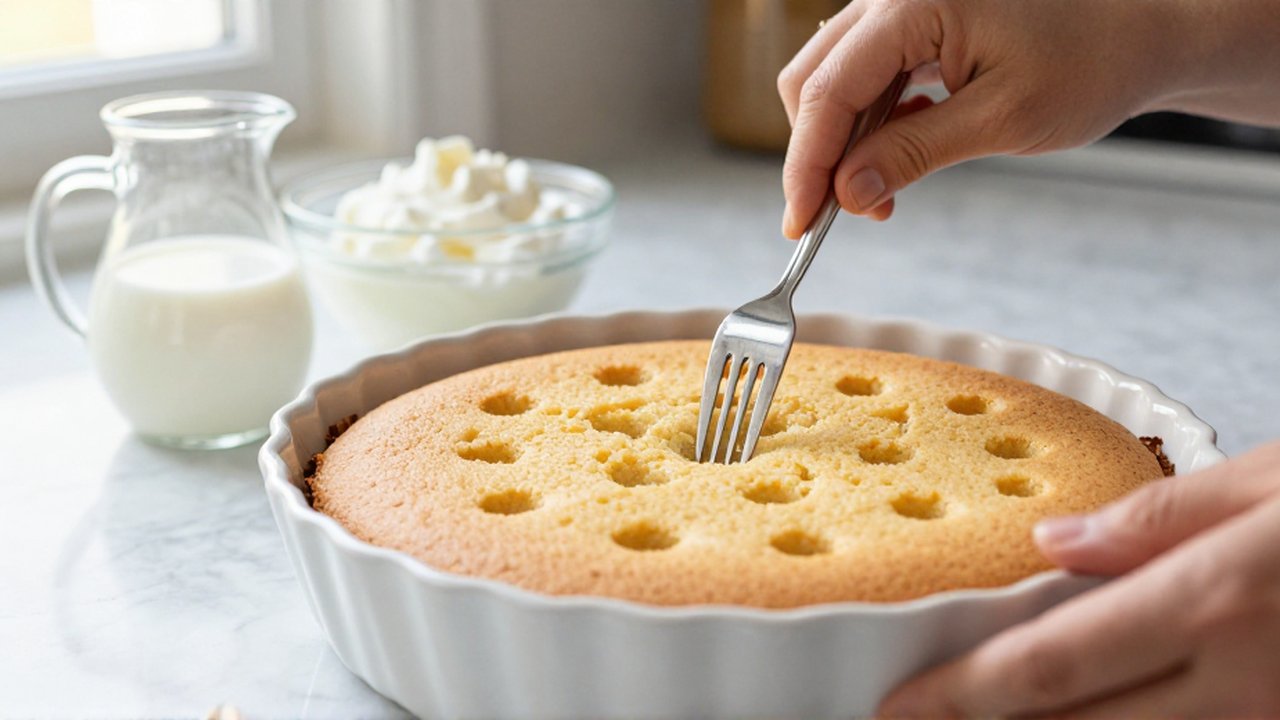
- The Soak: Use a fork or a skewer to poke holes all over the surface of the cooled cake. Slowly pour the milk mixture over the cake, starting from the edges and moving toward the center.
- Chill: This is the most important step. Cover the pan and refrigerate for at least 4 hours, though overnight is highly recommended. This allows the liquid to distribute evenly.
- Top and Serve: Before serving, whip the heavy cream and powdered sugar until stiff peaks form. Spread it over the soaked cake and garnish as desired.
Mastering the Layering and Texture
The layering of Tres Leches is a matter of moisture management. Since the cake is served cold, the temperature of the soaking liquid matters. While some recipes suggest pouring warm milk over a warm cake, for the most consistent results in a home kitchen, pouring a room-temperature liquid over a completely cooled cake prevents the cake from disintegrating. If the cake is still warm when you add the milk, the starch structure is too weak to hold the liquid, resulting in a "soup" rather than a moist cake.
When it comes to the topping, the contrast between the heavy, sweet cake and the light, airy whipped cream is essential. Do not use a cooked frosting like buttercream; it is too heavy and cloying when paired with the three milks. A simple, stabilized whipped cream provides a much-needed break from the richness. If you find your whipped cream is losing volume, you can add a tablespoon of instant vanilla pudding mix to the cream while whipping; this acts as a stabilizer to keep the topping firm despite the moisture from the cake below.
Frequently Asked Questions
Can I use whole milk instead of heavy cream in the soaking liquid?
Yes, you can substitute heavy cream with whole milk if you prefer a less rich dessert. However, the heavy cream adds a velvety mouthfeel that is characteristic of a high-quality Tres Leches. If you use whole milk, the cake will be slightly lighter and less indulgent.
Why is my cake soggy and falling apart in the middle?
This usually happens for two reasons: either the sponge was not baked long enough to develop a strong structure, or you did not poke enough holes in the cake. Ensure you use a fork to create a thorough "grid" of holes from edge to edge so the milk doesn't just sit on top of the center.
How long does Tres Leches stay fresh in the refrigerator?
Because this dessert is dairy-heavy, it must be kept refrigerated at all times. It will stay fresh and delicious for up to 3 or 4 days. As it sits, the cake will continue to absorb moisture, so the texture will become even more unified over time.
Can I make this recipe gluten-free?
You can substitute the all-purpose flour with a high-quality 1-to-1 gluten-free baking flour. However, note that gluten-free sponges are often more fragile, so you may need to be even more gentle during the folding process to maintain the air bubbles.
Leave a Reply
Related posts